
TESTED HONESTLY · UPDATED SEPTEMBER 2026
Get Paid to Test Products at Home: What’s Real, What It Pays, and Why the Wait Is the Whole Job
Yes, companies mail ordinary women free products and pay them to say what they think. No, it is not a paycheck, and anyone charging you a “tester registration fee” is the product. Here is how home product testing actually works, what a study honestly pays, and how to get matched without spending a dollar.
- $0 to join, always
- Honest per-study math
- The tester-fee trap, named
Some links on PowerPocketz are affiliate links — if you sign up through them, we may earn a commission at no cost to you. It’s exactly why nothing stays recommended once it stops paying people properly.
Product testing in one paragraph
Brands need real households to try a new cereal, a diaper, a dish soap, or an app before they spend millions launching it. They pay research panels to find those households, and the panels pay you: usually the product free, plus cash or a gift card when the study is finished. You get in by joining a panel free, filling out a long profile, and then waiting until a study wants a woman exactly like you. That wait is the part every other article hides.
Free to join. Never a fee. The profile is the only work you do up front.
How a home-use test actually goes
A typical study arrives as an email or an in-app invite: “We’re looking for households with a child under five who buy store-brand snacks.” You answer a short screener. If you match, a box shows up a week or so later with the product and instructions. You use it the way you normally would for a few days or a couple of weeks, then fill in a questionnaire about it. Payment lands after the panel reviews your answers.
Three things surprise people the first time. One: the product is often unlabeled, or the label is a plain white sticker, because the brand wants unbiased reactions. Two: the questions are specific and long, because the brand is paying for detail, not enthusiasm. Three: you almost always keep the product. That last part is why a $10 study can feel like $25.
- Join a panel free and finish the whole profile. The household questions decide which studies find you. A half-finished profile is invisible.
- Answer screeners fast. Studies fill quotas in hours. The invite you open tomorrow is usually already closed.
- Use the product honestly and write real answers. Panels quietly track whether your answers are thoughtful, and thoughtful members get invited again.
What product testing honestly pays
Here is the range I see across the panels I track, and it lines up with what independent money sites report for home-use tests: most pay somewhere between $10 and $30 in cash or gift cards, run 30 minutes to two hours of actual effort spread over the test period, and you keep the product. A few longer diary-style studies, where you log use for weeks, pay more. Tech and app tests that need a screen recording tend to pay per session rather than per product.
Now the honest part. The money per study is fine. The frequency is the problem. Even on a good panel, a matched study might come every few weeks, not every few days. Product testing is a topping on top of everyday paid surveys, never the meal. Anyone showing you $500 a week from “product testing jobs” is showing you a headline, not a bank statement.
The panels that send actual boxes, with receipts
I keep a short ranked list of the panels that currently pass my four rules, including the ones that lean toward product feedback rather than general polls. What each pays, how fast the first cash-out lands, and payout receipts as they come in. Free, maintained, opens the second you join.
Who gets picked, and how to become that person
Panels are not choosing the most enthusiastic tester. They are filling a quota that a brand wrote: “200 women aged 28–45, two or more kids, buys frozen meals twice a month, Midwest.” If you are outside the box, no amount of eagerness helps. If you are inside it, you get in by being reachable and reliable.
That means: keep your profile current when something changes (new baby, new pet, moved states). Turn on notifications for the panel app so you see invites inside the first hour. Finish every study you accept, because unfinished studies get you quietly deprioritized. And stack three or four panels, because each one only has so many studies matching your household at any moment. One panel feels like being ignored. Three or four feel like a steady drip.
If the profile questions feel invasive (household income, who lives with you, what you buy), that is the matching engine doing its job. What a legitimate panel never asks for is a payment card or a fee. Not to “verify” you, not for “shipping,” not for a “starter kit.”
Product testing vs. surveys vs. focus groups
These get lumped together and they are not the same job. Everyday surveys are frequent and small: $1–$3 for five to twenty minutes, something available most days. Product tests are occasional and medium: $10–$30 plus the product, when you match. Focus groups and paid studies are rare and large: $50–$150 or more for a session, a few times a year at most. The women who see steady money run all three at once from the same panels, treat the surveys as the base, and let the tests and sessions land as bonuses.
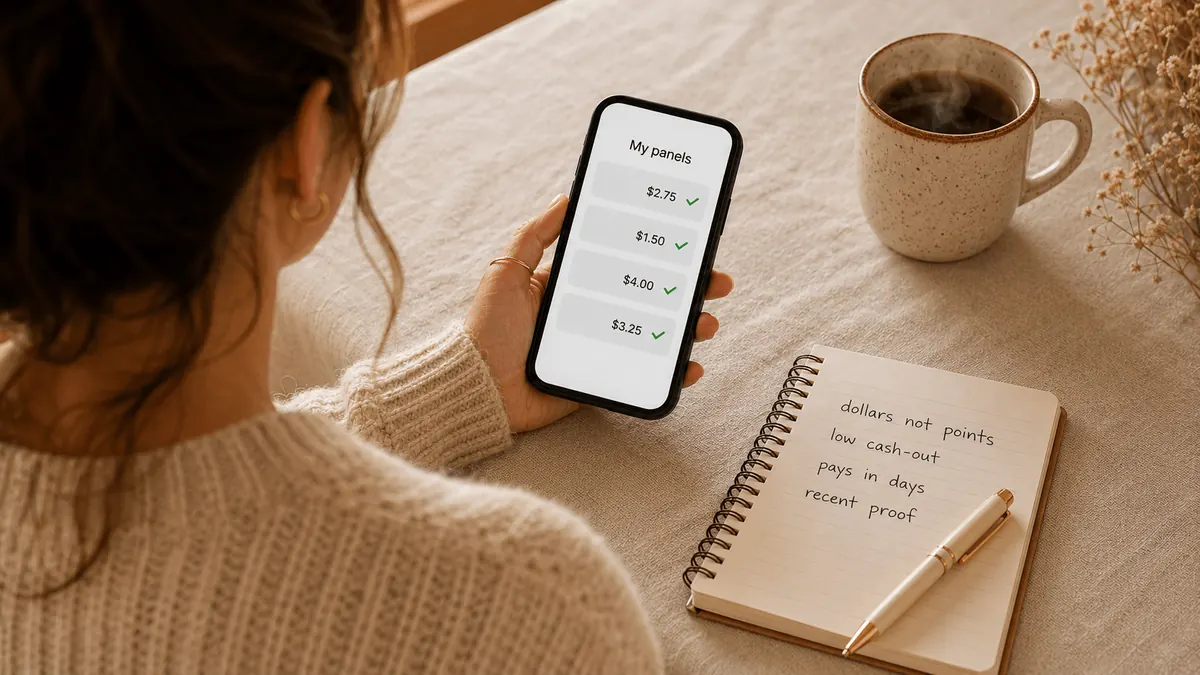
The site-wide rule applies here too: dollars, not points; a cash-out under $10; payment inside two weeks; recent dated proof. Product-testing panels that show you a dollar value for the study before you start are telling you they expect to pay it.
Product-testing red flags vs. green flags
Walk away when you see:
- any “tester registration” or “shipping” fee
- a job ad promising $25–$45 an hour to test products
- “Keep a free iPhone for reviewing it” style ads on social media
- a request to pay for the product first and be “reimbursed”
- a Telegram or WhatsApp group instead of a real panel site
- no privacy policy, no company name, no physical address
Lean in when you see:
- a long household profile before any study
- a dollar value shown on the study invite
- unbranded or plain-labeled products in the box
- a real return address and a real questionnaire
- payment by PayPal, direct deposit, or a named gift card
- this-year screenshots from real members
The FTC’s rule for job offers is the same one I use for panels: nobody honest asks you to pay to get paid.
Questions I get about this
Do I get to keep the products I test?
Almost always, yes. Brands rarely want a used dish soap back. Occasionally an electronics test asks for the device to be returned with a prepaid label, and the invite says so up front.
How often will I actually get a product test?
On one panel, maybe once every few weeks when you match. On three or four panels, more like a couple a month. It is uneven by nature, which is why you run everyday surveys underneath it.
Is product testing safe? What about allergies?
Screeners ask about allergies and sensitivities for a reason. Answer them honestly and skip any food or skincare test you are unsure about. Legitimate studies never require you to use something you have reacted to before.
Can I do this only from my phone?
Joining, screeners, and most questionnaires work fine on a phone. A few app-testing studies that record your screen prefer a laptop, and the invite tells you.
Do I pay tax on free products and gift cards?
Cash, gift cards, and products you keep all count as income in the IRS’s eyes. At casual product-testing levels it stays small, but track it. My guide on survey income and taxes walks through the thresholds.
Where the numbers on this page come from
I don’t ask you to take dollar figures on faith. Every outside number above traces to one of these, checked September 2026:
- IRS: net earnings from self-employment of $400 or more require a return — www.irs.gov
- FTC consumer advice on job scams: “Don’t pay for the promise of a job” — consumer.ftc.gov

I run the filter so you don’t have to
I’m Maya. I’ve paid the entry fees, kept the starter kit, and waited three weeks for a box that never came. So now I keep the short list: only panels passing all four rules, with what they pay, how fast, and the receipts. Join free and the ranked page opens immediately.
 by Maya · PowerPocketz