
THE TALK-OUT-LOUD LANE · UPDATED SEPTEMBER 2026
Get Paid to Test Websites and Apps: Lovely Money Per Minute, Unlovely Frequency
Companies pay ordinary people to click through a website or an app, say out loud what confuses them, and record it. It is real, it pays well per minute, and it is the most misrepresented thing on the “make money from home” lists because they quote the per-test rate and skip how rarely a test lands. Here is the honest version, from what you need to how the money arrives.
- Real per-test pay
- Real frequency
- Mic required, face optional
Some links on PowerPocketz are affiliate links — if you sign up through them, we may earn a commission at no cost to you. It’s exactly why nothing stays recommended once it stops paying people properly.
Website testing in one paragraph
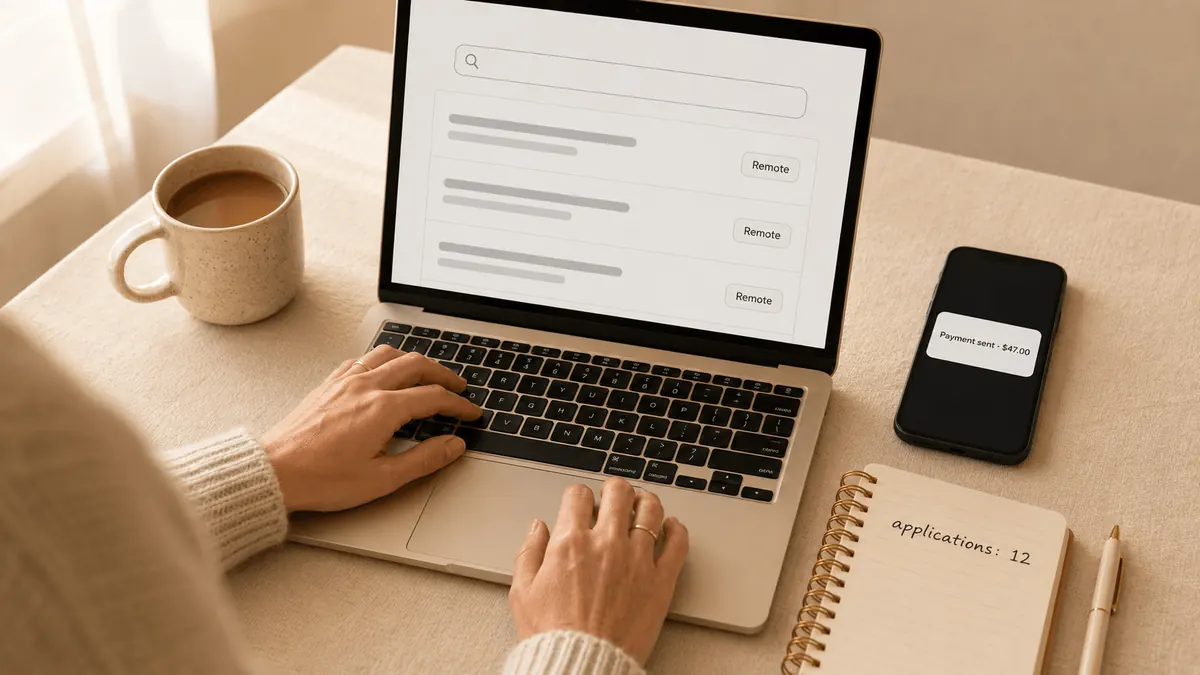
You join a testing platform free, do a short practice test with your microphone on, and fill in a demographic profile. When a company wants feedback from people like you, a test appears: follow tasks on a site or app, talk through what you are thinking, ten to twenty minutes. The platform pays a set amount per test, usually by PayPal, and the biggest platform states plainly that payment is sent about 14 days after completion. The catch is that tests are sporadic: one or two a week is typical for an active tester, and some weeks bring none.
Free to join. A microphone is required. Your face usually is not.
What a test honestly pays, and how often one lands
Platforms set the amount per test and show it before you accept. Short unmoderated tests commonly pay in the $4–$10 range for ten to twenty minutes; live, moderated sessions with a researcher on a call pay several times that for an hour. The largest platform says reward amounts vary with test type, duration, and demand, and that your dashboard always shows the amount before you start, which is exactly the transparency rule I use for survey panels.
Now the sentence every listicle skips. Testing platforms themselves say most participants take one or two tests a week. Some weeks bring none, because tests recruit against specific profiles: iPhone users who shop at a certain store, parents who use a certain banking app. So the honest monthly number for an active tester is tens of dollars, occasionally more, never a paycheck. It is the best per-minute money on this site and the least predictable.
What you actually need
- A working microphone and a quiet room. You narrate your thoughts the whole way through. Background noise and a silent tester both get a test rejected.
- A laptop or a phone that meets the platform’s minimum specs. The big platform lists recent Windows, macOS, iOS, and Android versions and an upload speed of at least 3 Mbps for desktop tests. Most tests are desktop; many are mobile.
- Plain, honest, specific narration. “I expected the price to be here and it is not” is worth more to the company than “this is nice.” Testers who are specific get rated higher, and higher-rated testers see more tests.
- Patience with the screener. Each test starts with a few qualifying questions. You will not qualify for most. That is the quota system, not a judgment.
What you do not need: a webcam for most tests, technical knowledge, or a fee. Any “website tester job” that charges for training or certification is a scam by the FTC’s definition and by mine.
The base under the topping, with receipts
Website tests land on top of everyday paid opinions, and the everyday part is where most lists fail you. I keep a short ranked list of the panels currently passing my four rules, with what each pays, how fast the first cash-out lands, and receipts as they come in. Free, and it opens the second you join.
How the money arrives
Almost all testing platforms pay by PayPal, and most state a fixed delay: the largest says payments for completed tests are usually sent 14 days later. There is typically no cash-out minimum because each test pays as its own item, which is a quieter version of my rule two. A rejected test, for a broken recording or silent narration, pays nothing, so the first few tests are worth doing carefully.
Two things that keep this lane honest. First, treat it as a topping: sign up, do the practice test well, turn notifications on, and let tests land on top of the everyday surveys that pay most days. Second, do not build your month around it. The women who love website testing are the ones who forgot about it and then got a $10 ping on a Tuesday.
Website-tester red flags vs. green flags
Walk away when you see:
- a “tester job” ad promising $25–$45 an hour, full time
- any training, certification, or registration fee
- recruiting by text or DM
- a “test” that asks you to buy something and be reimbursed
- a platform with no stated pay-per-test and no stated payout timing
- a request for card details to “verify” you
Lean in when you see:
- a free practice test before you are accepted
- the dollar amount shown on every test before you start
- a stated payout method (usually PayPal) and a stated delay
- a screener you often do not pass (real quotas)
- minimum device specs published plainly
- a rating system that rewards specific, honest narration
The FTC’s job-scam rule covers this lane completely: nobody honest asks you to pay to get paid, and nobody honest promises a full-time wage for clicking around.
Questions I get about this
How much do you get paid to test websites?
Short unmoderated tests commonly pay around $4–$10 for ten to twenty minutes; live sessions with a researcher pay several times more for an hour. Platforms show the amount before you accept.
How many tests will I get?
Testing platforms themselves say one or two a week is typical for an active participant, and some weeks bring none. It is sporadic by design because tests recruit against specific profiles.
Do I have to show my face?
Usually no. Most tests record your screen and your voice. Some live sessions use a webcam and say so on the invite.
When do I get paid?
By PayPal, and the largest platform states payment is usually sent 14 days after a completed test. No cash-out minimum on most platforms because each test pays separately.
Is website testing taxable?
Yes, like all of this income. Small amounts still count. My guide on survey income and taxes covers the current thresholds.
Where the numbers on this page come from
I don’t ask you to take dollar figures on faith. Every outside number above traces to one of these, checked September 2026:
- UserTesting: get paid to test, contributor FAQ (pay shown per test, PayPal, payment sent about 14 days later, device requirements) — www.usertesting.com
- FTC consumer advice on job scams — consumer.ftc.gov
- IRS self-employment tax center — www.irs.gov

I run the filter so you don’t have to
I’m Maya. I got a $10 test on a Tuesday once and forgot about the platform for a month, which is exactly the right relationship to have with it. The everyday panels underneath pass four rules and live on one maintained page with receipts. Join free and it opens immediately.
 by Maya · PowerPocketz